

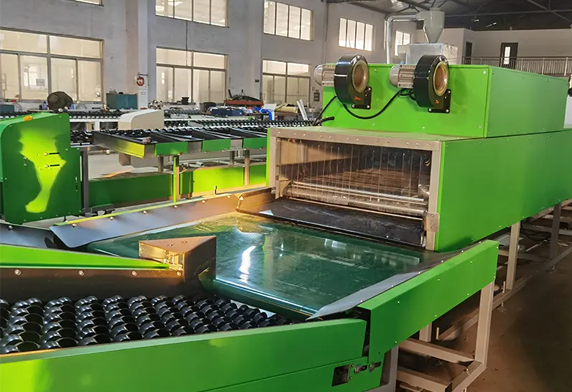
A thermoforming machine for plastic packaging automation is a fully or semi‑automatic system that heats a plastic film or sheet, forms it into a specific shape using a mold, and then trims the formed part to create ready‑to‑use packaging. These machines are widely used in food, medical, consumer goods, and industrial sectors to produce trays, blisters, clamshells, cups, containers, and other protective packaging at high speed and consistent quality. In modern manufacturing, automated thermoforming lines play a critical role in improving packaging efficiency, reducing labor costs, and ensuring precise, repeatable product dimensions. With continuous film feeding, integrated forming and cutting stations, and optional in‑line printing or labeling, a thermoforming machine for plastic packaging automation is a core component of many high‑volume packaging plants. A thermoforming machine for plastic packaging automation is a packaging production line that uses heat and pressure or vacuum to shape thermoplastic materials into functional packaging. The process typically starts from a roll of plastic film (roll‑fed thermoforming) or individual sheets (sheet‑fed thermoforming) and ends with cut, stacked, and sometimes counted packaging products, ready for filling and sealing. Automation elements—such as servo drives, programmable logic controllers (PLC), human‑machine interfaces (HMI), automatic film indexing, integrated cutting and stacking, and optional robotic handling—enable high‑speed, continuous operation with minimal manual intervention. Different production requirements call for different thermoforming machine designs. Below are the main types commonly used for plastic packaging automation. Roll‑fed thermoforming machines are designed to work with continuous plastic film wound on rolls. The film passes through heating, forming, and cutting stations in a horizontal direction. Sheet‑fed thermoforming machines process individual plastic sheets, which are manually or automatically loaded into the forming area. Vacuum thermoforming machines rely primarily on vacuum suction to pull the heated plastic sheet against the mold surface. Pressure thermoforming machines use both vacuum and compressed air to push the plastic into the mold, allowing more detailed shapes and thinner wall thickness. Inline thermoforming machines integrate packaging forming with product filling and sealing to create complete packaging automation lines. An automated thermoforming system consists of several coordinated modules. Understanding these components helps in specifying, operating, and optimizing the thermoforming machine for plastic packaging automation. The technical specifications of a thermoforming machine for plastic packaging automation vary by application, material, and production capacity. The following tables illustrate typical parameter ranges. These are generic examples and not tied to any specific manufacturer. The thermoforming process in an automated line is continuous and synchronized. Below is a simplified overview of the key process steps used by a thermoforming machine for plastic packaging automation. Adopting a thermoforming machine for plastic packaging automation offers multiple advantages in productivity, quality, and cost efficiency. Thermoforming machines for plastic packaging automation serve many industries. The following sectors are particularly common users. Selecting the right thermoforming machine for plastic packaging automation involves balancing capacity, material, and product requirements with budget and space constraints. The following criteria are commonly evaluated. Consistent quality is essential for plastic packaging, especially in regulated industries. Modern thermoforming machines for plastic packaging automation include advanced control systems that support stable and repeatable processes. Thermoforming machines for plastic packaging automation combine moving mechanical parts, high temperatures, and pressurized systems. Proper safety measures are therefore essential. To ensure long‑term performance, a thermoforming machine for plastic packaging automation requires systematic maintenance and lifecycle management. Sustainability is an increasingly important theme in plastic packaging. Thermoforming machines for plastic packaging automation can support more sustainable production through energy efficiency and material optimization. Thermoforming plastic packaging presents several technical challenges. Automation and advanced control features help mitigate these issues. In a fully automated environment, a thermoforming line for plastic packaging may be part of a larger packaging system. A typical workflow might include: A thermoforming machine for plastic packaging automation is a highly efficient and versatile solution for producing a wide range of plastic packaging products. By integrating heating, forming, cutting, and automated handling in a single continuous line, these machines deliver high throughput, consistent quality, and significant labor and material savings. Through careful selection of machine type, forming area, material compatibility, and automation level, manufacturers can tailor thermoforming systems to meet the specific needs of food, medical, consumer, and industrial packaging applications. With growing emphasis on energy efficiency, sustainability, and process data, modern thermoforming machines continue to evolve as a central technology in automated plastic packaging production. Thermoforming Machine for Plastic Packaging Automation
What Is a Thermoforming Machine for Plastic Packaging Automation?
Core Functions of Automated Thermoforming Machines
Types of Thermoforming Machines Used in Plastic Packaging Automation
1. Roll‑Fed Thermoforming Machines
2. Sheet‑Fed Thermoforming Machines
3. Vacuum Thermoforming Machines
4. Pressure Thermoforming Machines
5. Inline Thermoforming and Form‑Fill‑Seal Systems
Key Components of a Thermoforming Machine for Plastic Packaging Automation
Film Unwinder and Feeding System
Heating Station
Forming Station
Cutting or Punching Station
Stacking, Counting, and Discharge System
Control System and Automation
Typical Technical Specifications
General Machine Parameters
Parameter Typical Range Description Forming Area (max) 400 × 300 mm to 900 × 700 mm Maximum usable mold area per cycle Forming Depth Up to 40–150 mm Maximum draw depth of packaging cavity Film Width 250–920 mm Maximum width of plastic film or sheet Material Thickness 0.15–1.5 mm (roll‑fed) / up to 6 mm (sheet‑fed) Typical thickness of plastic materials processed Cycle Speed 10–40 cycles/min (application dependent) Number of forming cycles per minute Production Output Up to tens of thousands of packs/hour Depends on cavity layout and cycle speed Power Supply 380–480 V, 50/60 Hz, 3‑phase Industrial voltage standards (regional variations) Installed Power 20–120 kW Total power for heaters, drives, and auxiliaries Compressed Air Requirement 6–10 bar, flow according to machine size For pneumatic operations and pressure forming Vacuum Requirement Dedicated vacuum pump system Provides necessary forming vacuum level Material Compatibility
Material Abbreviation Typical Application Notes for Thermoforming Polystyrene PS / HIPS Food trays, yogurt cups, disposable containers Easy to thermoform, widely used for cost‑effective packaging Polyethylene Terephthalate PET / APET / CPET Blister packs, clamshells, clear trays Good clarity, strength, and recyclability Polypropylene PP Microwaveable trays, food containers, lids Higher forming temperature, good heat resistance Polyvinyl Chloride PVC Blister packs, medical packaging (in some regions) Good formability; regulatory and environmental considerations Polylactic Acid PLA Biodegradable packaging, eco‑friendly trays Requires careful temperature control, compostable under conditions Multilayer Barrier Films e.g. PET/PE, PA/PE Modified atmosphere packaging (MAP), vacuum packaging Provide oxygen and moisture barrier for extended shelf life Control and Automation Features
Feature Typical Option Benefit for Automation PLC Control Industrial‑grade PLC with modular I/O Reliable control of all machine functions HMI Interface Color touch screen User‑friendly setup, status visualization, alarm display Servo Drives Servo‑driven indexing and forming Precise positioning, faster changeover, energy efficiency Recipe Management Storage of multiple product parameters Quick changeover for different packaging formats Remote Diagnostics Ethernet / VPN connectivity Remote support, monitoring, and software updates Data Logging Production and quality data storage Traceability, performance analysis, and process optimization Thermoforming Process in Automated Plastic Packaging
Advantages of Thermoforming Machines for Plastic Packaging Automation
High Production Efficiency
Consistent Quality and Precision
Cost Savings and Material Optimization
Flexibility in Packaging Design
Improved Hygiene and Product Safety
Integration with Broader Packaging Automation
Applications of Thermoforming Machines in Plastic Packaging Automation
Food and Beverage Packaging
Medical and Pharmaceutical Packaging
Consumer Goods and Electronics
Industrial and Automotive Components
Key Selection Criteria for a Thermoforming Machine for Plastic Packaging Automation
Production Volume and Speed
Packaging Design and Dimensions
Material Type and Barrier Requirements
Automation Level
Changeover and Flexibility
Energy Consumption and Operating Cost
Space, Layout, and Infrastructure
Process Control and Quality Management
Temperature Control
Forming Pressure and Vacuum Monitoring
Dimensional and Visual Inspection
Traceability and Documentation
Safety Considerations for Automated Thermoforming Machines
Maintenance and Lifecycle Management
Routine Maintenance Tasks
Spare Parts and Upgrades
Performance Monitoring
Energy Efficiency and Sustainability
Energy‑Efficient Design
Material Savings and Recycling
Support for Eco‑Friendly Materials
Common Challenges and How Automation Helps
Maintaining Uniform Wall Thickness
Dealing with Material Variations
Reducing Scrap and Defects
Typical Workflow in a Thermoforming Packaging Line
Glossary of Key Terms in Thermoforming and Plastic Packaging Automation
Term Definition Thermoforming A process that shapes heated thermoplastic materials into products using molds and vacuum or pressure. Forming Station The part of the thermoforming machine where heated plastic is shaped into the final packaging. Cycle Speed The number of forming cycles completed in one minute. Indexing The controlled movement of film or sheet from one station to the next in a thermoforming machine. Plug‑Assist A mechanical plug used to pre‑stretch the plastic during forming to improve thickness distribution. Form‑Fill‑Seal (FFS) An integrated process where packaging is formed, filled with product, and sealed in one line. Multilayer Film A plastic web made of several layers with different functions (e.g., barrier, sealability, stiffness). OEE Overall Equipment Effectiveness, a metric for measuring productivity in manufacturing. HMI Human‑Machine Interface, the touch screen or panel used by operators to control the machine. PLC Programmable Logic Controller, an industrial computer used to control automation systems. Conclusion
Telephone: +86 15253598306
Email: sales@fushijixie.cn
Address: Langao Industrial Zone, Longkou City, Shandong Province, 265709, China


Copyright © Longkou Fushi Packing Machinery Co., LTD. All rights reserved. Sitemap
This website uses cookies to ensure you get the best experience on our website.

 Español
 Portugues
 Pусский
 Français
 العربية
 Türk dili
 Indonesia
 Tiếng Việt
 فارسی



 Phone
Comment
(0)